
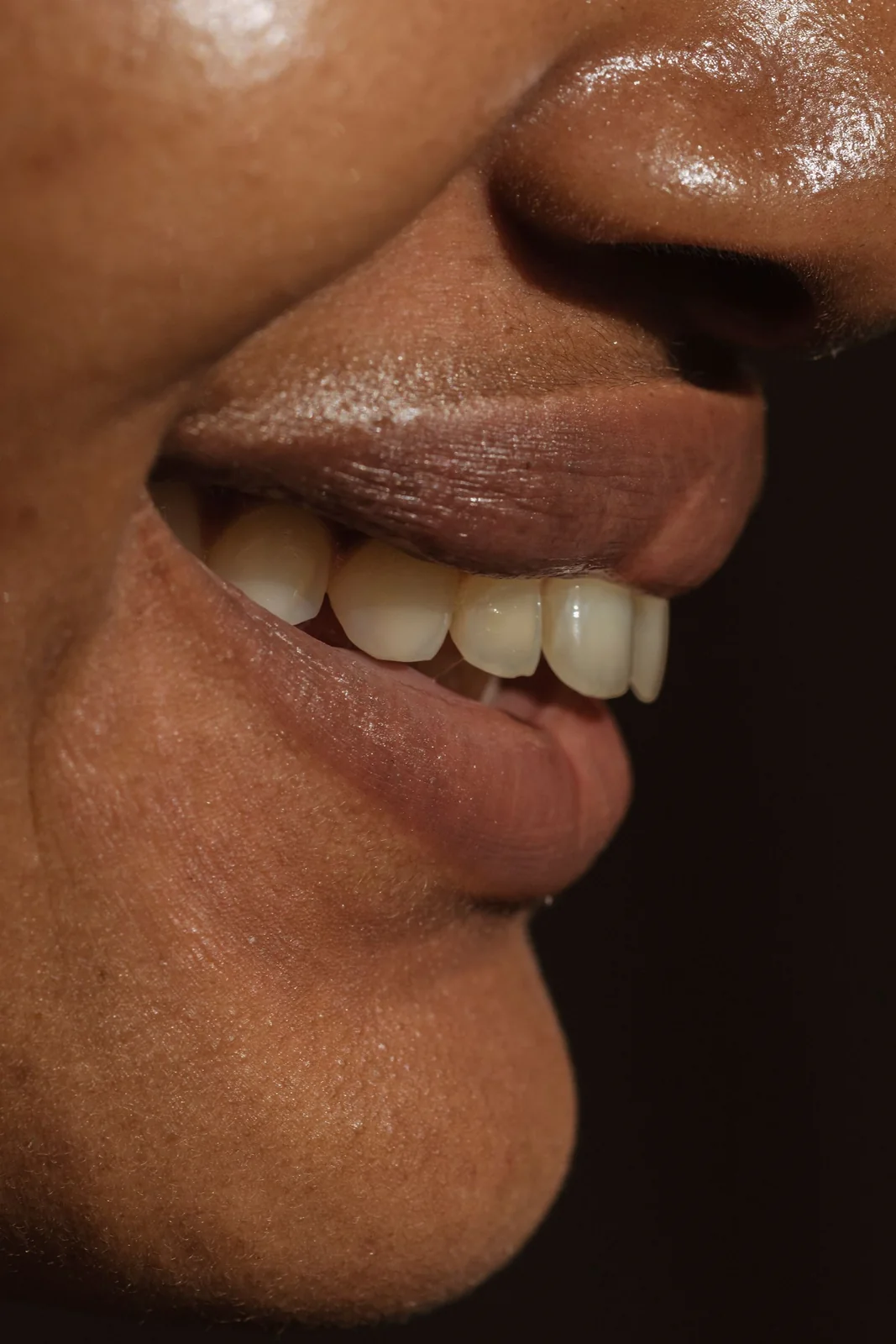
Assessment and placement
A dentist examines the teeth and gums and addresses decay or gum problems before cosmetic treatment. For many veneers, some enamel is removed from the front and sides of the tooth; because enamel does not grow back, this makes treatment irreversible. The dentist records the tooth's shape with an impression or scan so a custom veneer can be made. A temporary covering may be used if needed. At placement, the dentist checks the fit and appearance, bonds the veneer, and checks the bite. Preparation varies by veneer type and patient.
Caring for veneers
Care for veneered teeth much like natural teeth: brush twice daily with fluoride toothpaste and clean between teeth every day. Avoid biting hard objects or using teeth as tools. A veneer does not prevent decay in the tooth beneath or around it, so routine oral hygiene and dental care remain important. Contact a dentist if a veneer feels loose or your bite feels off.